
A website can look busy without producing much business. Traffic rises. People read a page, click around for a minute and leave. None of that helps much if nobody calls, books or asks for a quote.
That gap is the reason lead generation matters. Anyone trying to understand what is lead generation in digital marketing can think of it as turning attention into a real enquiry. The wider picture on Web Work Done Now includes search, ads and content.
The article on PPC growth shows how paid search can bring people in when they are already looking for a service.
What Actually Counts as a Lead?
A visitor is not automatically a lead. Someone reading a blog may simply be curious. A lead appears when that person leaves a useful signal the business can respond to.
That signal might be a phone call, contact form, booking request, quote enquiry or email signup. Quality still varies. A homeowner asking for an estimate this week is more useful to a contractor than someone downloading a checklist with no project planned.
How Does Lead Generation Work?
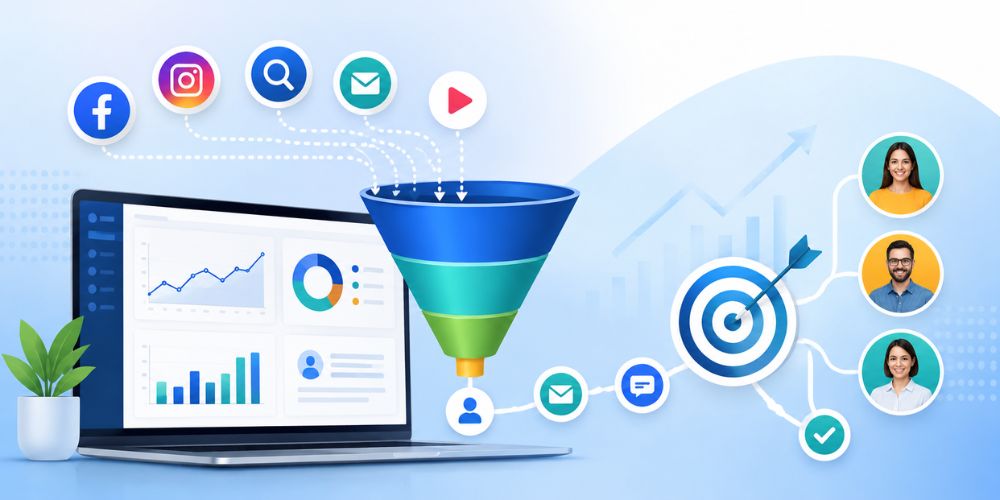
Most lead generation follows a fairly ordinary path. Someone notices the business. The person lands on a page that feels relevant. Then something on that page makes contact feel worth the effort.
The path often looks like this:
- A search result, ad or post creates interest
- The visitor reaches a useful page
- A call, form or booking creates the lead
- The business responds
- A suitable enquiry moves into the sales process
Problems usually appear in the middle. The phone number may be hard to find. The form may ask for too much. A quote button may sit below several long sections nobody wants to read.
Which Channels Bring in Better Leads?
Different channels suit different businesses. A plumber may get strong leads from Google Search. A local gym may hear from people through social media. A law firm may get enquiries from articles answering specific questions.
Paid search can work well when demand already exists. PPC Management Services can help keep campaigns focused on search terms that suggest buying intent instead of casual research.
Social media behaves differently. The article on social media leads shows how useful posts, replies and local visibility can turn attention into conversations.
Why Do Some Leads Go Nowhere?
Some leads were never a good fit. Others are lost after they arrive.
A contractor may receive ten quote forms then discover that half are outside the service area. A dentist may get enquiries for a treatment the practice does not offer. A slow callback can lose someone who contacted three businesses at once.
This is why lead volume on its own can be misleading. A smaller batch of enquiries can be far more valuable when the people are nearby, interested in the right service and ready to talk. That is often more useful than chasing a bigger traffic number.
What Makes a Lead More Useful?
The page should make the service clear. The location should be easy to spot. Pricing does not always need to be listed but the next step should not be a mystery. A visitor should know whether the business wants a call, booking or short form.
Useful pages also filter people naturally. A contractor that clearly explains the jobs it handles will spend less time answering enquiries for work it never takes.
The same applies to ads and landing pages. If the ad promises one service but the page talks about everything the company does, good prospects can lose interest quickly.
Which Lead Numbers Are Worth Watching?
A small business does not need a dashboard full of numbers. A few figures usually tell the story.
A practical monthly review can include:
- Qualified enquiries
- Lead source
- Cost per lead
- Response time
- Booked calls or appointments
- Leads that became customers
Traffic still matters because it shows whether people are finding the site. It just needs context. One hundred extra visitors mean little if none of them become enquiries.
Lead quality deserves attention too. A campaign can become cheaper per lead while getting worse at attracting actual customers.
When Does Lead Generation Get Messy?
The picture gets harder to read when several channels run together.
A person may notice a social post then search the business name two days later. Another may click an ad, leave then return through Google Maps. The final form submission does not always tell the full story.
Poor tracking can make a useful channel look weak. So can a slow website, broken form or staff who take too long to answer new enquiries. Sometimes the problem sits after the click rather than inside the marketing channel.
What Should a Small Business Fix First?
The fastest improvement is often not another campaign. It is checking the path that already exists.
If visitors arrive but nobody makes contact, the page deserves attention. If forms arrive but the leads are weak, targeting may be the problem. If good enquiries appear but few become customers, follow up may need work.
That review usually gives a clearer next move than simply spending more.
Conclusion
Lead generation is useful when it brings the business people who fit the service, location and timing. Raw traffic cannot show that on its own.
Digital Marketing Services can help connect the channels around that goal. The measure stays simple: useful enquiries, fewer dead ends and a clearer view of what brings business in.