
Most businesses do not run out of things to say. They run out of order. One week they post three times. The next week nothing happens. A holiday comes and goes. A product update gets missed. Someone remembers Instagram at 8 p.m. and throws something together.
That is where a social media calendar helps. It gives the business a simple plan for what to post, where to post it and when it should go live. For companies building a stronger online presence, the main website should also guide the topics because social content works better when it connects back to what the business actually offers.
What Is a Social Media Calendar?
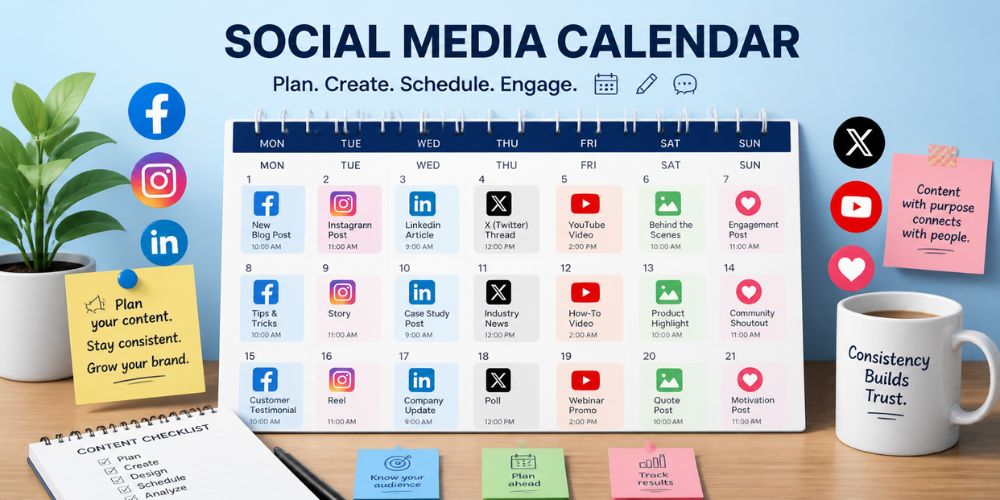
A social media calendar is a planned schedule for posts. It can be a spreadsheet, a calendar app, a project board or a social scheduling tool.
It does not need to look fancy. It needs to be clear.
At a basic level, the calendar should show the platform, date, post idea, caption, image or video note and status. That is enough to stop the team from guessing every morning.
The point is not to remove creativity. It is to give creativity a place to land.
Why Does Planning Feel So Hard?
Social media planning sounds easy until the business gets busy. Customers need help. Staff have questions. Orders, calls and appointments take over the day.
Then posting becomes a last-minute task.
That is why creating social media schedule should be simple enough to follow even during a busy week. If the system is too detailed, the team will stop using it. If it is too loose, it will not solve anything.
A good calendar sits in the middle. Planned but flexible.
What Should Go Into the Calendar?
A useful calendar should answer a few simple questions before the post is created.
What is the goal? Who is the post for? What platform will it go on? What image, video or graphic is needed? Who is responsible for writing and approving it?
A basic calendar can include:
- Post date
- Platform
- Topic or campaign
- Caption draft
- Image or video note
- Link to use
- Person responsible
- Status such as draft, approved or posted
This gives the team one shared place to look. No scattered texts. No forgotten notes. No “who was handling that?” moments.
How Often Should a Business Post?
There is no perfect number for every business. A small local business may do well with three strong posts per week. A larger brand may need daily posts across several platforms.
The better question is this: what can the business maintain without dropping quality?
Posting five times one week and disappearing for ten days does not build much trust. A steady rhythm works better. Even two or three thoughtful posts per week can feel more professional than random activity.
For companies that need help keeping the message focused, Social Media Marketing Services can support the planning side without making the process feel too heavy.
What Types of Posts Should Be Planned?
A strong calendar should not repeat the same type of post every day. That gets dull fast.
The business can rotate a few content types:
- Helpful tips
- Customer questions
- Product or service highlights
- Behind-the-scenes moments
- Team updates
- Reviews or client wins
- Seasonal reminders
- Short educational posts
This mix keeps the page alive. It also helps the business sound more human. Not every post has to sell. Some posts should answer. Some should show. Some should simply remind people that the business is active and reliable.
How Should a Weekly Calendar Look?
A simple weekly calendar may look like this:
Monday can share a helpful tip. Wednesday can show a service or product in use. Friday can post a customer question, team moment or seasonal reminder.
That is enough to create rhythm.
The business can also plan monthly themes. A landscaper may focus on spring cleanup in March. A salon may focus on wedding looks in May. A marketing company may focus on planning before a new quarter.
This keeps ideas tied to real customer needs instead of random content.
What Mistakes Should Businesses Avoid?
The biggest mistake is planning too much too soon. A large calendar looks impressive, but if nobody follows it, it fails.
Another mistake is copying trends without asking whether they fit the brand. A trend may get views, but that does not mean it brings the right audience.
Businesses should also avoid posting only promotions. People get tired of being sold to. A good calendar gives them value, proof and personality before asking for attention.
Conclusion
A social media calendar does not need to be complicated. It needs to make posting easier, cleaner and less rushed.
The business should start small. Plan one month. Choose a few content types. Assign responsibility. Keep the calendar visible. Review what worked at the end of the month and adjust.
That is how social media planning becomes manageable.
For businesses that want social content, website messaging and campaign planning to work together with less guesswork, Digital Marketing Services from Web Work Done Now can help turn scattered ideas into a clearer monthly plan.