
A small business can spend weeks improving its website and still hear very little. It can also pay for clicks that never turn into one useful enquiry. That is when the PPC or SEO question stops feeling theoretical.
Web Work Done Now works across both channels. In fact, the starting game is better when it depends on the right business needs immediately and how it can invest, while staying patient for the aftermath.
The Actual Difference
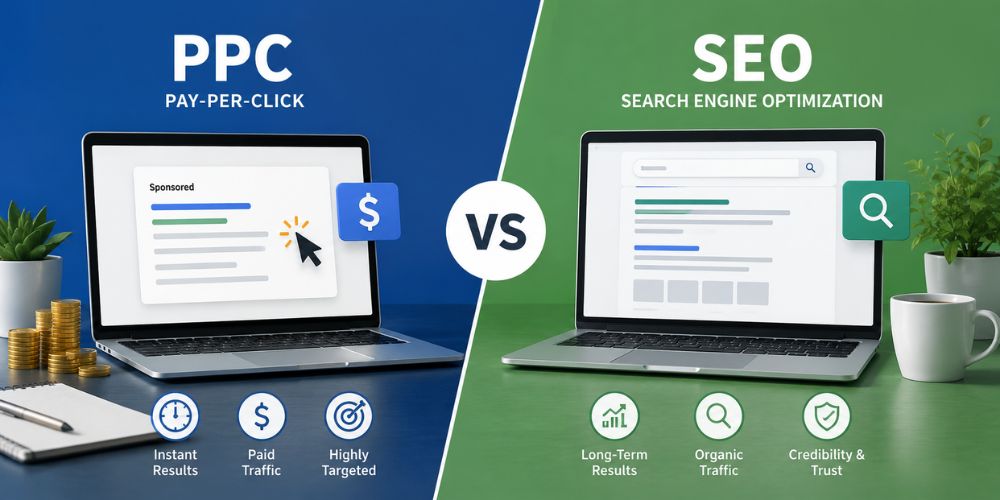
SEO helps a website earn space in unpaid search results. That usually means improving service pages, fixing weak site structure, publishing useful content and building trust over time.
PPC works on a shorter clock. A paid advert can appear as soon as the campaign is live. The business pays when someone clicks. Once the spending pauses, that visibility usually goes with it.
When Does PPC Make More Sense?
Sometimes waiting is the expensive option.
A new service may need bookings this month. A seasonal offer may end before an SEO page has time to move. PPC puts the business in front of people who are already searching.
It also makes testing direct. One advert can lead with price. Another can focus on speed. The response shows which message deserves more budget.
The guide to fast PPC growth explains why paid search often works while slower marketing work takes shape.
PPC often fits when the business:
- needs enquiries soon
- serves a clear local area
- can track calls or forms
- has a set monthly budget
- wants to test a new offer
The weak point is waste. Broad keywords, loose location settings or a poor landing page can burn money without producing much.
When Is SEO the Better Fit?
SEO makes more sense when the business wants steady visibility without paying for every visit. It takes longer, but a strong page can keep bringing traffic after the first work is finished.
That does not make SEO free. Research takes time. Content needs updating. Technical problems still need attention.
The article on SEO foundations shows why good pages are only one part of the job. A site also needs trust from outside sources.
Professional SEO services can help when a website has thin pages, weak local reach or content that never gains ground.
Which Option Costs Less?
It depends on what the business is trying to achieve.
PPC may be cheaper when ten solid leads are needed this month. SEO may offer stronger value when the aim is to bring in customers over several years.
The monthly fee does not tell the whole story. A badly managed ad campaign can waste money quickly. Weak SEO can waste months on searches that never lead to business.
Cost per enquiry gives a clearer answer than traffic alone. Cheap clicks have little value when nobody calls.
Can PPC and SEO Work Together?
Yes. For many businesses, that is the more practical route.
PPC can bring early traffic while SEO is still building. It can also show which searches lead to real enquiries. Those findings can shape future pages and content.
SEO can strengthen the pages used for ads. A clearer page gives the visitor a better reason to call, book or send a form.
The budget does not need an even split. One profitable service may run through PPC while the wider site builds organic visibility.
What Should a Business Choose?
Three questions usually make the answer clearer:
- How soon are leads needed?
- What can the business spend each month?
- Is the goal a short push or lasting visibility?
PPC often suits the business that needs movement now. SEO suits the business that can wait for a longer return. A mixed plan can cover both needs.
Conclusion
Neither channel wins every time. The right choice depends on timing, budget and the type of growth the business needs.
For faster visibility with tighter spending control, PPC management services can keep campaigns focused on useful searches. SEO can build the slower path beside them.